
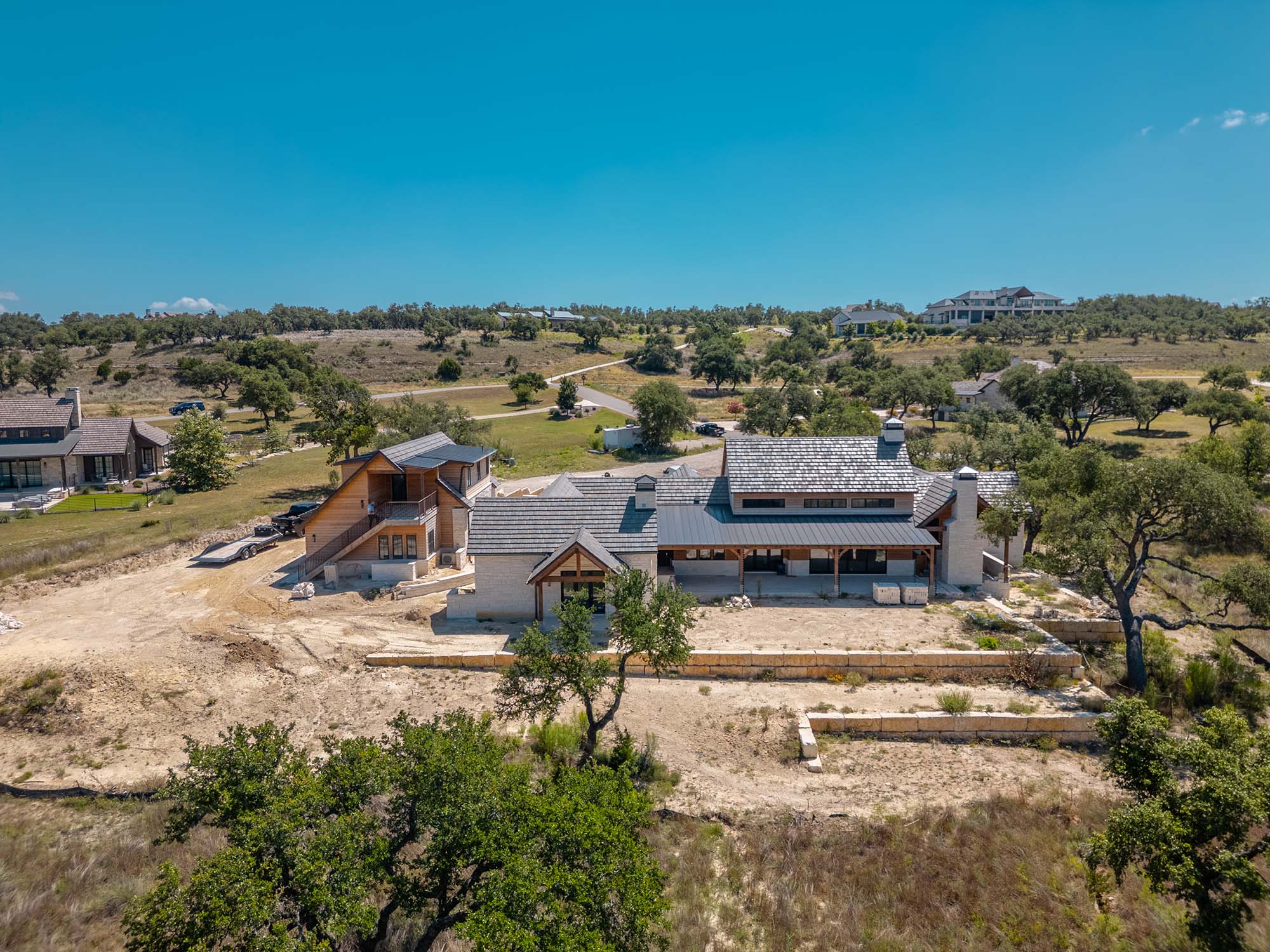
Short answer: Building on Central Texas acreage is its own discipline — the land, utilities, and tax picture matter as much as the house itself. This hub walks through evaluating raw land, wells and septic, the ag exemption, and how to choose the right home style for your property.
Start with the land
Before you design anything, evaluate the acreage: soil and rock, slope, drainage, access, views, and where utilities can reach. These factors drive cost and even dictate where — and what — you can build. A builder who knows Hill Country land can spot constraints and opportunities early.
Wells, septic, and off-grid utilities
Off municipal service, most acreage homes need a private well and an aerobic septic system — commonly $20,000–$40,000+ combined — plus planning for power and, increasingly, energy independence. Our septic guide covers the basics that apply to ranch land too.
The ag exemption
Many Central Texas properties carry an agricultural valuation that keeps property taxes low. How you build and use the land can affect that exemption, so it’s worth understanding before you break ground.
Choosing your home style
Farmhouse, ranch home, or barndominium? Each fits acreage differently on cost, durability, and resale. Our comparison guide — Farmhouse, Ranch, or Barndominium? — breaks down which is right for you.
Designing the whole property
A ranch is more than a house. Barns, workshops, casitas, equipment storage, and equestrian facilities should be planned into the site from day one. Our complete guide to building on a Central Texas ranch goes deeper on designing for acreage.
Frequently asked questions
What extra costs come with building on acreage?
A private well and aerobic septic, rock excavation and site prep, long driveways, and utility runs — all on top of the home itself.
Will building affect my ag exemption?
It can. Confirm the details with your county appraisal district and builder before you start.
Building on land? Request a free consultation with Goliath Luxury Homes.