
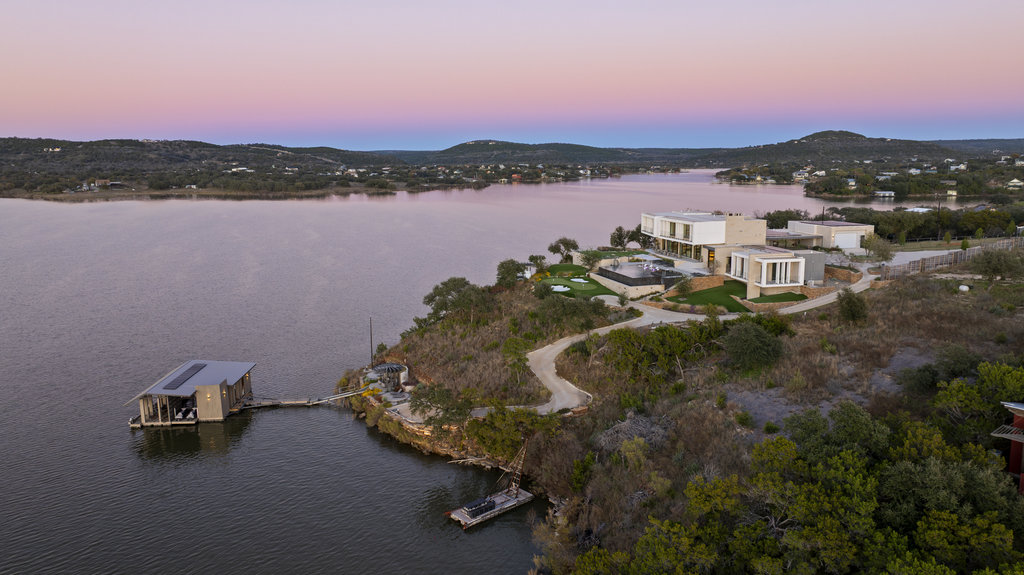
Short answer: Building on the Highland Lakes usually means working with the LCRA’s Highland Lakes Watershed Ordinance, which regulates stormwater runoff, impervious cover, docks, and on-site sewage near the water. Larger luxury homes commonly cross the thresholds that require a permit, so plan for it early.
What triggers an LCRA permit
Projects that create more than 10,000 square feet of impervious cover — or disturb more than an acre of land — typically require a permit. Between the home, driveway, patios, and pool, a large custom home reaches that threshold easily.
Who administers the rules
LCRA has interlocal agreements with counties and some lakeside cities, so your local jurisdiction may administer part or all of the ordinance. Confirm early whether LCRA, the county, or the city handles your permit.
Docks and on-site sewage
Docks and floating structures are permitted separately — waterfront ownership doesn’t automatically grant one. Near the lake, on-site sewage facilities fall under additional LCRA oversight. Our septic guide and waterfront guide go deeper.
Frequently asked questions
Do I always need an LCRA permit?
Not always, but large luxury homes often do. It depends on impervious cover, disturbed area, and your lot’s location.
Who confirms whether I need a permit?
Check with LCRA and your local jurisdiction, since administration is often shared. An experienced builder manages this for you.
Request a free consultation and we’ll navigate LCRA permitting for your build.