
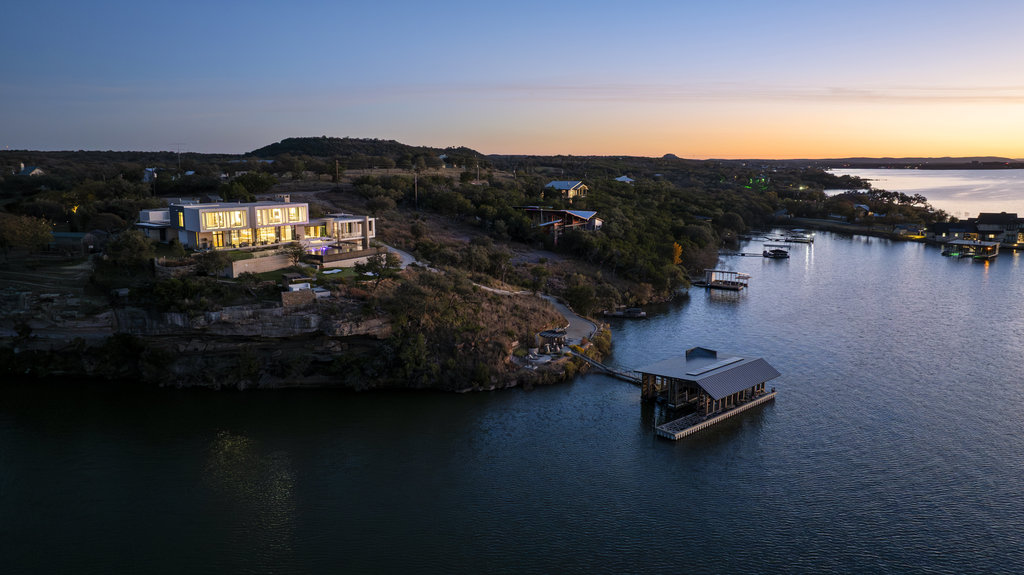
Building on a lakefront lot sounds simple at first: find the view you love, design the house you want, and start building. In reality, building on a lakefront lot in the Highland Lakes takes more planning than a typical homesite. From Lake LBJ and Kingsland to Marble Falls, Lake Buchanan, Spicewood, and Llano, waterfront property comes with unique lot constraints, shoreline considerations, drainage concerns, septic questions, and design decisions that can affect everything from your timeline to your long-term enjoyment of the home. That is why many buyers of Highland Lakes custom homes start with feasibility and site planning before they ever finalize a floor plan. Goliath Luxury Homes builds throughout the Texas Hill Country and Highland Lakes, with an emphasis on waterfront homes, private docks, pools, outdoor entertaining areas, transparent communication, detailed scheduling, and energy-efficient, high-end construction.
Why Building on a Lakefront Lot Is Different
The biggest mistake buyers make is assuming a waterfront lot works like an ordinary subdivision lot. It usually does not. A lakefront property often has more moving parts: the shoreline itself, setback requirements, drainage patterns, topography, dock considerations, floodplain review, and in some cases septic or utility limitations. Goliath Luxury Homes already positions its Highland Lakes work around the reality that every lot is different, from narrow waterfront sites to large acreage properties, and that experience matters when designing around those differences.
That is especially true in places like Lake LBJ, where homeowners want to maximize water views, preserve outdoor living space, and create easy access to the lake without compromising the function of the home. A lot that looks perfect on a listing sheet may require major design changes once the buildable area, slope, drainage, and waterfront rules are fully understood. Goliath’s own Lake LBJ content makes that point clearly: building on the water is a very different process from buying resale or building in a standard neighborhood.
Building on a Lakefront Lot Starts With the Lot Itself
Before you fall in love with a floor plan, take a hard look at the actual homesite.
Check the Buildable Area, Not Just the Lot Size
On a lakefront property, the total lot size rarely tells the full story. What matters more is how much of that lot is truly buildable after accounting for setbacks, easements, shoreline conditions, utility access, drainage requirements, and any neighborhood restrictions. On some waterfront lots in Kingsland, Marble Falls, or Spicewood, the buildable footprint may be narrower than buyers expect.
A good builder looks beyond the listing photos and asks practical questions early. Where will the driveway sit? Can the garage access work naturally? Is there enough usable depth for the home, pool, patios, and outdoor kitchen? Will the site allow for privacy from neighboring docks and adjacent homes? These are the kinds of details that affect the final design every bit as much as square footage.
Study the Slope and Topography
Many lakefront homes in the Hill Country are built on lots with some degree of slope. That slope may be part of the appeal because it creates long views, but it can also increase engineering complexity, excavation costs, retaining wall needs, and drainage planning. Goliath Luxury Homes highlights sloped Hill Country terrain and varied lot conditions as a core reason local builder experience matters, especially around Horseshoe Bay and Lake LBJ.
A site with major elevation change can still be a fantastic lot, but it may need a more customized foundation plan, better stormwater control, or a terraced outdoor layout instead of a flat backyard concept. That is why site analysis should happen before finalizing major design choices.
Understand Shoreline, Dock, and Waterfront Regulations
One of the most overlooked parts of building on a lakefront lot is that the water’s edge creates another layer of planning.
For Highland Lakes properties, the Lower Colorado River Authority oversees several lake-related regulations, including land and water use rules, dredging and fill considerations, on-site sewage regulation in certain zones, and standards for docks and marinas. LCRA states that all boat docks and marinas on the Highland Lakes must comply with its standards, and residential docks on lakes Buchanan, Inks, LBJ, Marble Falls, and Travis must meet the applicable safety requirements. LCRA also says it does not require a permit, registration, or fee for residential docks of 1,500 square feet or less, but the dock still must meet the relevant standards.
That matters because your waterfront design may need to account for:
- The relationship between the house and the shoreline
- The best placement for future dock access
- Outdoor entertaining zones near the water
- Elevation and safety at the lake edge
- Space for patios, steps, cart paths, or retaining features
If your goal is to build a custom waterfront home with a dock, pool, and outdoor entertaining area, those elements should be planned together instead of one at a time. Goliath’s Highland Lakes positioning already reflects that integrated approach by emphasizing waterfront homes with private docks, pools, and outdoor living spaces designed as a cohesive whole.
Pay Attention to Septic, Sewer, and Utility Planning
Utilities can make or break the feasibility of a waterfront lot.
Some lots will have access to community sewer or municipal services. Others may require an on-site sewage facility. In the Highland Lakes area, that issue deserves early attention. LCRA says it regulates on-site sewage facilities within a 2,200-foot zone around the upper Highland Lakes and within a 2,000-foot zone around Lake Travis. Its permit process requires site-specific information such as proposed locations for the drain field, septic tank, house, wells, and driveways.
For buyers looking at property around Lake Buchanan, Kingsland, or other waterfront areas, that means septic is not something to figure out at the last minute. It can influence where the house sits, how much usable outdoor space remains, and whether your preferred site plan is realistic.
Utility planning should also include:
- Water service availability
- Electric routing
- Internet and smart-home infrastructure
- Propane needs, if applicable
- Driveway access for construction and long-term use
A builder who understands local waterfront lots can identify these issues before they become expensive surprises.
Floodplain and Drainage Need Early Review
Waterfront living is about views and access, but it also means respecting how water moves across and around the property.
FEMA notes that development in a Special Flood Hazard Area requires a floodplain development permit before construction begins. Local governments enforce those requirements. Llano County states that no work may begin until a development permit application has been submitted and either a floodplain permit or a non-floodplain determination has been issued. Burnet County likewise provides flood-zone determinations, floodplain development regulations, and related flood information through its development services resources.
That does not mean every lakefront lot is a bad lot. It means the lot needs proper due diligence. Drainage, grading, finish floor elevation, runoff control, and shoreline protection all need to be considered as part of the design and pre-construction process.
This is one reason local expertise matters so much in the Highland Lakes. A home that feels effortless when complete usually required a lot of careful site planning upfront.
Design the Home Around the Lot, Not the Other Way Around
One of the smartest ways to approach building on a lakefront lot is to let the property shape the design.
Prioritize the Views That Matter Most
Not every room needs the same exposure to the water. In many Highland Lakes custom homes, the main living area, kitchen, dining room, primary suite, and covered patio become the signature view spaces. Utility areas, secondary bedrooms, garages, and service spaces can often be arranged to support privacy and functionality without taking up prime waterfront frontage.
That kind of planning can make the home feel bigger, brighter, and more connected to the lake without increasing square footage unnecessarily.
Think About Outdoor Living From Day One
Lakefront living in places like Lake LBJ, Marble Falls, and Spicewood is as much about the exterior as the interior. Outdoor kitchens, large covered patios, pools, shaded terraces, and easy circulation to the water are often just as important as the indoor finishes. Goliath Luxury Homes specifically highlights custom pools, outdoor living areas, landscaping, and thoughtful design as part of its work across the Hill Country.
When outdoor spaces are part of the original plan, the result is more natural. The house sits better on the land, the views are framed correctly, and the backyard feels like an extension of the home rather than an afterthought.
Build for the Hill Country Climate
A waterfront lot may catch breezes and beautiful light, but it also brings full sun exposure, seasonal weather shifts, and the need for durable exterior materials. Goliath’s site emphasizes energy-efficient and sustainable building practices alongside smart home integration and long-term craftsmanship, which is especially relevant in exposed Hill Country settings.
In practical terms, that can mean:
- Covered outdoor spaces for shade
- Window placement that balances views and heat control
- Exterior finishes that hold up well near the water
- Efficient systems that support year-round comfort
- Smart home features for security, lighting, and remote monitoring
Neighborhood and Community Rules Still Matter
Even when the lake is the main attraction, the neighborhood can still shape the build.
Some waterfront communities have architectural review requirements, property owners association rules, fencing limitations, exterior material preferences, or design guidelines that affect everything from rooflines to landscaping. Goliath’s Horseshoe Bay content specifically points to POA design review processes, lakefront setback requirements, drainage and topography considerations, and lifestyle-specific design needs as part of local building.
This is one more reason it helps to involve your builder early. A builder with real local experience can often spot issues during lot evaluation instead of after you have already committed to a design direction that may need revision.
Budget for Site Work, Not Just the House
One of the biggest misconceptions in custom building is assuming the house budget tells the whole story. On a waterfront lot, site costs can vary significantly based on slope, excavation, retaining, drainage improvements, utility runs, foundation complexity, and shoreline-related features.
That does not mean lakefront building is unpredictable. It means the budgeting needs to be honest from the start. Goliath Luxury Homes repeatedly positions itself around transparent communication, detailed schedules, and clear project management, which is exactly the mindset buyers need when comparing waterfront lots and planning a custom home investment.
A realistic budget should account for more than the home’s finishes and square footage. It should reflect the actual conditions of the land.
A Better Process for Lakefront Buyers
For most homebuyers, the best approach is not to buy the lot first and ask questions later. It is to evaluate the property with your builder and design team early enough to make informed decisions.
A strong lakefront planning process usually includes:
- Reviewing the lot’s buildable area
- Understanding setback and shoreline constraints
- Verifying utility and septic feasibility
- Checking floodplain and drainage considerations
- Planning the home, outdoor living, and dock relationship together
- Matching the design to the lot’s topography and views
- Building a realistic budget based on actual site conditions
That approach helps you avoid redesigns, reduce surprises, and create a home that truly fits the property.
Choosing the Right Builder for a Highland Lakes Waterfront Home
The best lakefront homes do not happen by accident. They come from aligning architecture, engineering, construction, and site planning around the realities of the lot.
That is where local experience becomes valuable. Goliath Luxury Homes builds custom homes throughout the Highland Lakes and Texas Hill Country, including waterfront projects designed around private docks, outdoor entertaining, energy-efficient construction, and a transparent client-focused process. For buyers considering property around Lake LBJ, Kingsland, Marble Falls, Lake Buchanan, Spicewood, or Llano, that kind of local understanding can make the difference between forcing a plan onto the lot and creating a home that feels like it belongs there.
Building on a lakefront lot is exciting, but it works best when every decision begins with the land itself. If you are exploring building on a lakefront lot in the Highland Lakes and want expert guidance on feasibility, design, and construction, Goliath Luxury Homes can help you evaluate your property and plan a custom waterfront home that fits both your lifestyle and the site.