
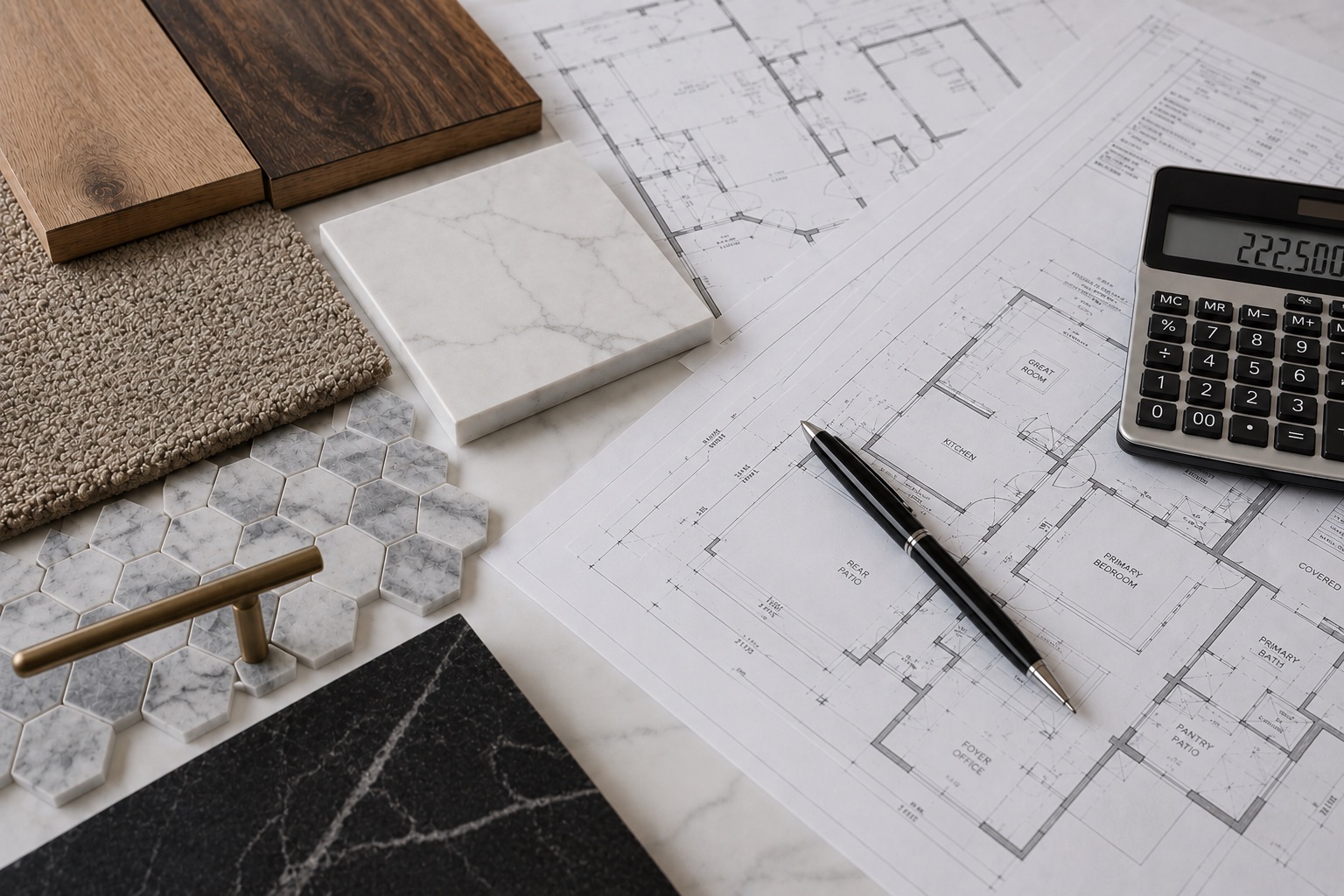
Short answer: An allowance is a budgeted dollar amount for a selection you haven’t finalized yet — flooring, cabinetry, lighting, appliances. If your final choice costs more than the allowance, you pay the difference. Setting realistic allowances up front is the single best way to avoid surprise overages.
How allowances work
Because you often sign a contract before every finish is chosen, builders budget placeholders. A $40,000 flooring allowance means the budget assumes $40,000 — pick $70,000 in stone and you owe the $30,000 gap.
Why they cause overages
Low allowances make a bid look attractive but set you up to “go over” on nearly every category. The overage isn’t the builder padding the price — it’s the budget catching up to the finishes you actually want.
How to set allowances that hold
Walk showrooms early and price your real preferences, then set allowances to match. Be honest about your finish level — don’t budget entry-custom and select luxury. Our cost guide and contracts guide explain how this fits the bigger budget.
Frequently asked questions
What’s the difference between an allowance and a bid item?
A bid item is priced from a finalized selection; an allowance is a placeholder for something not yet chosen.
How do I avoid allowance overages?
Finalize selections early and set allowances based on real, priced choices — not optimistic placeholders.
Request a free consultation and we’ll help you build a realistic allowance schedule.