
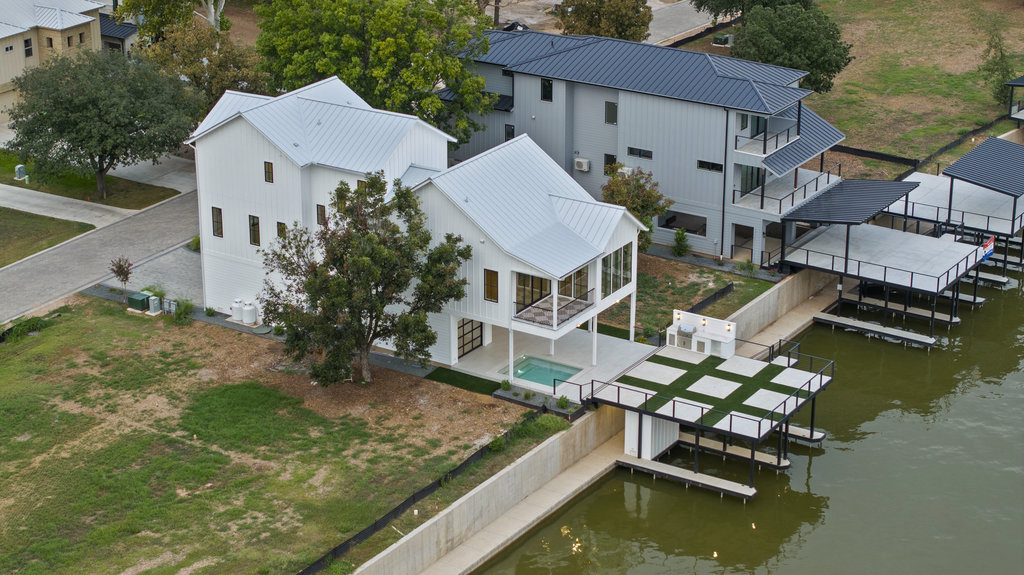
Short answer: Building on Lake Travis is one of the most rewarding — and most regulated — custom home projects in Central Texas. Unlike the constant-level Highland Lakes, Lake Travis is a fluctuating reservoir, which shapes everything from where you place the home to what kind of dock you can build. Add LCRA’s watershed rules and some of the strictest HOA design standards in the Austin metro, and it’s clear why buyers here work with a builder who knows the lake. This guide covers the water, the neighborhoods, the permitting, and the design decisions that matter most.
Lake Travis is a fluctuating lake — and that changes how you build
This is the single most important thing to understand before you buy a Lake Travis lot. Lake Travis is not a constant-level lake. It was designed as a flood-control and water-supply reservoir on the Colorado River, so its level can drop dramatically during drought and rise many feet in hours during a flood.
That has real design consequences that a Highland Lakes veteran of, say, Lake LBJ (a constant-level lake) won’t automatically anticipate:
- Setbacks and elevation. The home and key outdoor spaces should be sited and elevated with the lake’s full operating range in mind, not just today’s shoreline.
- Dock design. Floating docks and adjustable gangways handle a fluctuating lake far better than fixed structures. Owning waterfront does not automatically entitle you to build a dock — it’s a permitted structure.
- The view you buy today. A lot that’s “on the water” at a full lake may be well back from it in a deep drought. Evaluate the lot across the lake’s range, not on the best day.
We cover the constant-level vs. fluctuating distinction in depth in our guide to building on a Highland Lakes lakefront lot — it’s essential reading alongside this one.
LCRA and Travis County permitting: what to expect
Lake Travis sits under the Highland Lakes Watershed Ordinance, administered by the Lower Colorado River Authority (LCRA), which regulates development to control stormwater runoff into the lake.
- Impervious cover triggers permits. Projects that create more than 10,000 square feet of impervious cover — or disturb more than an acre of land — typically require an LCRA permit. Large luxury homes with driveways, patios, and pools reach that threshold easily.
- Who administers the rules varies. LCRA has interlocal agreements with Travis County and some lakeside communities, so your local jurisdiction may administer part or all of the ordinance. Confirm whether LCRA, the county, or the city handles your permit.
- On-site sewage near the lake. LCRA has regulated on-site sewage facilities within a 2,000-foot zone around Lake Travis since 1971. If your lot falls inside that zone, your septic (OSSF) permit runs through LCRA — not just the county. Our septic systems guide explains aerobic systems and permitting in detail.
None of this should scare you off — it’s simply the reality of building on a protected water supply. The key is working with a team that has moved projects through LCRA and Travis County before.
Where to build: the best Lake Travis-area communities
The Lake Travis market spans Lakeway, Spicewood, Bee Cave, and the surrounding hills. Each area has its own character, price point, and design standards.
Lakeway. The established heart of the Lake Travis luxury market, with mature neighborhoods, golf, and marinas. Lakeway’s building codes and HOA architectural review are among the most stringent in the Austin metro. Communities like Rough Hollow and the Hills of Lakeway anchor the area.
Spicewood. On the quieter southwest end, Spicewood blends Hill Country seclusion with lake access. Gated enclaves like Lakecliff and Barton Creek Lakeside draw buyers who want acreage and privacy. See our companion post on the top places to build a custom home in Spicewood.
Bee Cave & the 71 corridor. Closer to the city, with communities like Spanish Oaks offering golf, gated privacy, and quick access to Hill Country Galleria shopping and dining.
Hudson Bend & The Reserve at Lake Travis. Waterfront-focused pockets favored for teardown-and-rebuild lots and true lakefront estates.
When you evaluate a community, look past the amenities to the architectural control committee (ACC) guidelines. They dictate massing, materials, heights, and colors — and they vary a lot from neighborhood to neighborhood.
Designing a lake house for the way you’ll actually live
A lake house isn’t a primary residence that happens to face water. On Lake Travis, great design means:
- Orienting the home to the view and prevailing breeze, with major living spaces and outdoor rooms capturing the water.
- Blurring indoor and outdoor living with large sliding glass systems, covered patios, and outdoor kitchens sized for real entertaining.
- Planning for guests and gear — mudrooms, bunk rooms, and lake-toy storage.
- Elevation and durable materials that respect the fluctuating shoreline and Hill Country weather.
Our guide on designing a custom lake house for entertaining goes deeper on the layout and lifestyle decisions.
What building on Lake Travis costs
Lake Travis lakefront is a premium market, and construction costs reflect both the finish level buyers expect and the site conditions lakefront lots present — slope, rock, retaining walls, and elevated foundations. Expect luxury custom construction in line with, or above, broader Hill Country ranges. The most reliable path to an accurate number is an early lot evaluation with your builder.
Frequently asked questions
Is Lake Travis a constant-level lake?
No. Lake Travis is a fluctuating flood-control and water-supply reservoir on the Colorado River. Its level can fall significantly in drought and rise quickly in floods.
Do I need an LCRA permit to build on Lake Travis?
Often, yes. Projects creating more than 10,000 sq ft of impervious cover or disturbing more than an acre generally need an LCRA permit. LCRA, Travis County, or the local city may administer it — confirm early.
Can I build a dock just because I own waterfront?
No. Docks and floating structures are permitted separately. Floating, adjustable docks generally suit a fluctuating lake best.
Which Lake Travis communities are best for a custom home?
Lakeway for established luxury and golf, Spicewood for privacy and acreage (Lakecliff, Barton Creek Lakeside), Bee Cave/Spanish Oaks for lake-adjacent living close to the city, and Hudson Bend for true waterfront rebuilds.
How is building on Lake Travis different from Lake LBJ?
Lake LBJ is a constant-level lake, while Lake Travis fluctuates. That drives distinct decisions around siting, elevation, docks, and how you evaluate a lot’s water frontage.
Ready to build on Lake Travis? Request a free consultation with Goliath Luxury Homes.